
Forex breakout trading remains one of the most powerful strategies for capitalizing on significant market movements. While many traders struggle with false signals and missed opportunities, mastering this approach can help you identify high-probability entries with favorable risk-reward ratios. This comprehensive guide will take you beyond basic concepts to explore sophisticated techniques that can enhance your trading performance in 2025’s volatile currency markets.
Understanding Forex Breakout Trading: The Fundamentals
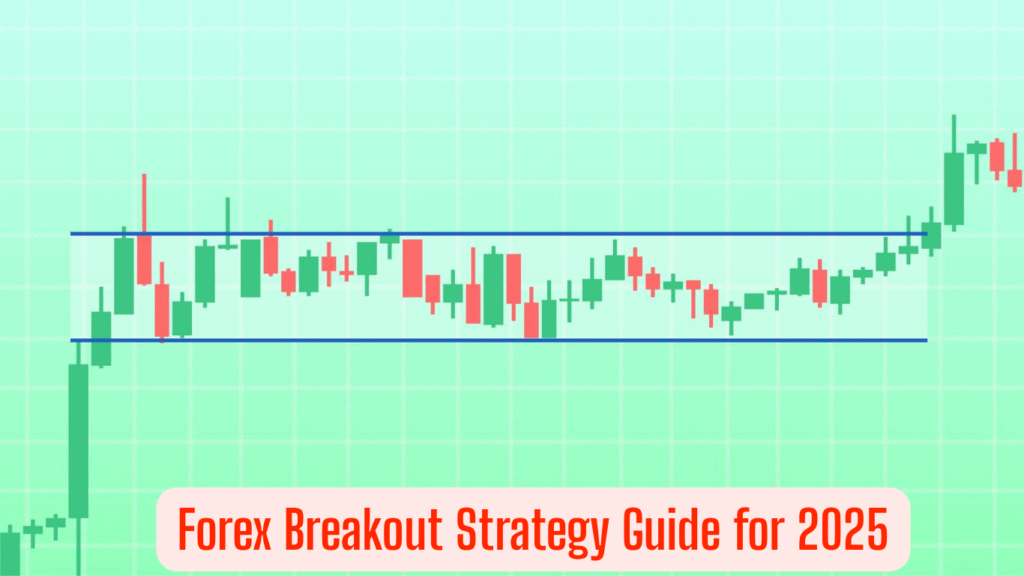
A breakout occurs when price moves beyond a defined support or resistance level with increased conviction . These moments represent crucial shifts in market sentiment where buying or selling pressure overwhelms previous equilibrium points, often signaling the start of substantial price movements .
Breakouts matter because they frequently initiate periods of increased volatility and directional trends that can yield significant profits for prepared traders . The forex market’s unique characteristics—including its 24-hour operation, high liquidity, and tendency to develop strong trends—make it particularly well-suited for breakout strategies .
The Market Context Behind Breakouts
Breakouts typically emerge after periods of consolidation or range-bound trading, where buyers and sellers reach a temporary equilibrium. As market participants await new information or shifting fundamentals, price action becomes constrained within increasingly narrow ranges. The eventual breakout represents a resolution of this uncertainty, with one side dominating the other.
Executing Your Forex Breakout Strategy: Entry, Exit, and Risk Management
Precision Entry Techniques
The most critical aspect of breakout trading involves distinguishing genuine breakouts from false signals. While novice traders often enter as soon as price touches beyond a level, professionals wait for confirmation:
- Retest Entries: The highest-probability entries often occur when price breaks through a key level, then returns to retest that level as new support (in bullish breakouts) or resistance (in bearish breakouts) . This retest confirms the level has flipped its role and provides an optimal risk-reward entry point.
- Breakout Candle Closes: Rather than trading intra-bar breakouts, wait for a full candle close beyond the level before considering entry . This simple filter eliminates many false signals and demonstrates sustained buying or selling pressure.
- Volume-Confirmed Breakouts: In forex, volume is best measured through tick volume or by monitoring volatility expansion using tools like the Average True Range (ATR) indicator . Genuine breakouts typically occur with above-average volume and expanding ranges.
Strategic Stop Loss Placement
Proper risk management separates successful breakout traders from those who consistently get stopped out:
- Place stops above or below the breakout candle at a minimum
- For wedge or triangle breakouts, position stops beyond the opposite side of the pattern
- Consider market volatility by referencing the ATR—avoid placing stops so tight that normal market noise triggers them
Profit Target Strategies
Setting logical profit targets completes your trading plan:
- Measured Moves: Calculate the height of the consolidation pattern (e.g., the range or the triangle at its widest point) and project that distance from the breakout point
- Previous Swing Highs/Lows: Identify obvious support or resistance areas where price may encounter opposition
- Risk-Reward Ratios: Always aim for minimum 1:2 risk-reward ratios, with many successful breakout trades achieving 1:3 or better
Table: Breakout Trading Risk-Reward Scenarios
| Trade Setup | Risk (Pips) | Reward (Pips) | Risk-Reward Ratio | Potential Return (2% Risk) |
|---|---|---|---|---|
| USD/JPY Wedge Breakout | 13 | 50 | 1:3.8 | 7.6% |
| GBP/NZD Channel Break | 45 | 175 | 1:3.9 | 7.8% |
| USD/JPY Daily Chart Pattern | 50 | 600 | 1:12 | 24% |
Advanced Breakout Techniques and Pattern Recognition
Trading Continuation vs. Reversal Breakouts
Understanding the context of your breakout significantly improves your edge:
- Continuation Breakouts: These occur within existing trends and typically offer higher-probability setups. After a strong trend, price consolidates before breaking in the direction of the underlying trend . Patterns like flags, pennants, and triangles often signal continuation setups.
- Reversal Breakouts: These more challenging setups occur when price breaks key levels against the prevailing trend, potentially signaling trend exhaustion and reversal . Patterns like double tops/bottoms and head and shoulders often precede reversal breakouts, requiring additional confirmation.
The Power of Wedge Patterns
Wedge patterns deserve special attention for breakout traders. These patterns form when price converges between downward-sloping support and resistance lines (in rising wedges) or upward-sloping lines (in falling wedges) . The compression of price action represents building momentum that often resolves in powerful breakouts.
As one experienced trader notes, “The longer the market consolidates, the more volatile the breakout will be” . This observation highlights the opportunity in extended consolidation patterns, where pent-up buying or selling pressure can trigger sustained moves.
Avoiding Common Pitfalls: False Breakouts and Confirmation Techniques
False breakouts (or “fakeouts”) represent the greatest challenge for breakout traders. These occur when price briefly moves beyond a key level before reversing direction, trapping traders on the wrong side of the move . Several techniques can help filter these false signals:
- Multi-Timeframe Confirmation: Check that breakouts on your trading timeframe (e.g., 4-hour) align with the direction of the next higher timeframe (e.g., daily)
- Momentum Confirmation: Use indicators like the Relative Strength Index (RSI) to confirm breakouts with strengthening momentum
- Session Timing: Trade breakouts during high-liquidity sessions (London, New York overlaps) when institutional participation increases genuine breakout potential
- News Filter: Avoid trading breakouts around major economic news releases unless the breakout continues after the initial volatility subsides
Putting It All Together: Real-Market Breakout Examples
USD/JPY Wedge Breakout
In a classic wedge breakout example on USD/JPY, the pair consolidated within a narrowing range before breaking below wedge support . The subsequent retest of former support (now resistance) provided an ideal short entry with a stop above the breakout candle. The trade achieved a 3.8:1 risk-reward ratio, turning a 2% risk into a 7.6% profit in just 32 hours .
GBP/NZD Breakdown Without Retest
Sometimes markets move aggressively without providing a retest entry. In a GBP/NZD example, price broke support and moved sideways for several candles instead of retesting . This behavior signaled exceptional weakness and presented an opportunity to enter using a market order, ultimately yielding 175 pips for 45 pips of risk .
Trading Psychology and Discipline in Breakout Trading
Successful breakout trading requires exceptional discipline. The tension between entering early (risking false breakouts) and waiting for confirmation (potentially missing optimal entries) challenges even experienced traders. Develop a consistent approach based on your testing and stick to it through inevitable losing periods.
Journal every breakout trade—recording the setup, entry rationale, management, and outcome. This practice helps identify which patterns and confirmations work best in current market conditions and reinforces disciplined execution.
Key Takeaways for Mastering Forex Breakout Trading
Forex breakout strategies offer compelling opportunities to capture significant market moves with clearly defined risk parameters. The approach works across timeframes and currency pairs, providing versatile tools for active traders. Remember these core principles:
- Patience pays—wait for confirmed breakouts with supporting volume/volatility
- Retests provide high-probability entries with optimal risk-reward
- Risk management is non-negotiable—always define stops before entering
- Context matters—trade breakouts that align with higher-timeframe trends
- Pattern recognition develops with screen time—study historical breakouts
As you incorporate these techniques into your trading plan, focus on consistency rather than immediate results. Breakout trading, like any specialized approach, requires practice and adaptation to your trading style and risk tolerance.
Disclaimer
Risk Warning: Trading foreign exchange on margin carries a high level of risk and may not be suitable for all investors. There is a possibility that you could sustain a loss of some or all of your initial investment, and therefore you should not invest money that you cannot afford to lose. The content provided here is for educational and informational purposes only and should not be considered financial advice. Past performance, as shown in any examples, is not indicative of future results. You should be aware of all the risks associated with foreign exchange trading and seek advice from an independent financial advisor if you have any doubts.
FAQs
1. What is the most common mistake traders make with breakout strategies?
The most frequent error is entering trades based on intra-candle “spikes” beyond support/resistance levels without waiting for confirmation. Professional traders typically wait for a full candle close beyond the level and often prefer retest entries after the initial breakout. This patience helps filter false signals that trap inexperienced traders.
2. How can I distinguish between genuine and false breakouts?
Genuine breakouts typically show three key characteristics: confirmation through a full candle close beyond the level, increased volume (measured through tick volume or volatility expansion), and alignment with higher-timeframe trends. Using additional confirmation tools like momentum indicators (RSI) and trading during high-liquidity sessions also improves identification accuracy.
3. Which timeframes work best for forex breakout trading?
Breakout strategies work across multiple timeframes, but the 4-hour and daily charts typically provide the optimal balance between signal reliability and trading frequency. These timeframes capture meaningful market moves while filtering market noise. Always confirm breakout direction with the next higher timeframe (e.g., check daily direction when trading 4-hour breakouts).
4. How much risk should I take per breakout trade?
Most professional risk management guidelines suggest risking no more than 1-2% of your trading capital per trade. For breakout strategies specifically, ensure your stop-loss placement is logically determined by market structure (beyond the breakout candle or pattern boundary) rather than an arbitrary percentage, then adjust position size accordingly.
5. Can breakout strategies be automated with trading algorithms?
While basic breakout rules can be programmed, fully automated systems struggle with the nuance of pattern recognition and context analysis. The most successful approach combines algorithmic alert systems for potential breakouts with manual analysis for confirmation factors like pattern quality, market context, and fundamental alignment.