
The foreign exchange (forex) market stands as the largest financial market globally, with a staggering daily trading volume exceeding $7 trillion . This decentralized marketplace operates 24 hours a day, five days a week, facilitating the continuous buying and selling of currencies across major financial centers worldwide. Unlike stock markets with centralized exchanges, forex operates over-the-counter (OTC), meaning transactions occur electronically between traders and brokers across the globe .
For aspiring traders, forex presents a dynamic landscape of opportunity where currencies are always traded in pairs. When you trade EUR/USD, for instance, you’re essentially buying euros while simultaneously selling US dollars, speculating on the relative strength between these two economies. The market serves dual purposes: it provides profit opportunities for traders through strategic speculation while allowing businesses to hedge against unfavorable currency shifts in international operations .
Understanding Forex Trading Fundamentals
What is Forex Trading?
At its core, forex trading involves simultaneously buying one currency while selling another, with the goal of profiting from changes in exchange rates. These currencies trade in pairs, such as EUR/USD (euro vs. US dollar) or GBP/JPY (British pound vs. Japanese yen). The first currency in the pair is the “base currency,” while the second is the “quote currency.” The price displayed represents how much of the quote currency is needed to purchase one unit of the base currency.
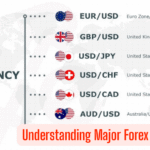
Major currency pairs always include the US dollar and represent the world’s largest economies. The most frequently traded majors include EUR/USD, USD/JPY, GBP/USD, and USD/CHF . These pairs typically offer the highest liquidity and lowest transaction costs (spreads), making them particularly suitable for beginners.
Key Forex Terminology
Before placing your first trade, understanding essential terminology is crucial:
- Pips: The smallest price move a currency pair can make, typically 0.0001 for most pairs
- Spread: The difference between the buy and sell price, representing your primary trading cost
- Leverage: Using borrowed capital to increase potential returns, which also amplifies risk
- Margin: The collateral required to open and maintain a leveraged position
- Lot size: Standardized trading quantities (standard, mini, micro) determining position size
The forex market structure comprises different segments: the spot market (immediate transactions), forward market (future-dated agreements), and futures/options markets (standardized contracts) . Beginners typically start with spot trading, which forms the foundation for understanding other forex instruments.
Getting Started with Forex Trading
Education First: Building Your Knowledge Foundation
The Commodity Futures Trading Commission emphasizes that thorough research is essential before depositing funds or sharing personal information with any forex dealer . Quality education should include understanding both technical analysis (studying price charts and patterns) and fundamental analysis (evaluating economic indicators and geopolitical events) .
Many successful traders dedicate weeks or months to paper trading (practicing with virtual funds) before risking real capital. Demo accounts offered by most reputable brokers provide invaluable risk-free environments to test strategies and familiarize yourself with trading platforms .
Choosing a Regulated Broker
Selecting the right broker is perhaps the most critical decision for a new trader. The CFTC advises verifying that both the dealer and its employees are registered with proper regulatory authorities like the CFTC and National Futures Association (NFA) . Registration indicates the firm meets specific financial requirements, undergoes regulatory supervision, and provides customer recourse through arbitration if disputes arise.
Table: Key Broker Selection Criteria
| Feature | Importance | What to Look For |
|---|---|---|
| Regulation | Essential for fund safety | CFTC, NFA (US), FCA (UK), ASIC (Australia) |
| Trading Platform | Your primary tool | User-friendly, stable, with necessary tools |
| Spreads & Commissions | Impacts profitability | Competitive pricing for your preferred pairs |
| Customer Service | Crucial for issue resolution | Responsive, knowledgeable support team |
| Educational Resources | Accelerates learning | Quality materials appropriate for beginners |
Developing Your Trading Plan
A well-constructed trading plan serves as your roadmap in the often-chaotic forex markets. This document should clearly outline your financial goals, risk tolerance, methodology, and evaluation criteria . Your plan should specify what percentage of your capital you’re willing to risk on each trade (commonly 1-2%), your preferred trading sessions (London, New York, Asian), and the currency pairs you’ll focus on.
Essential Forex Trading Strategies for Beginners
Trend Trading
Trend trading represents one of the most straightforward approaches for beginners. This strategy involves identifying the market’s prevailing direction and trading in alignment with it. If an upward trend is detected (successively higher highs and higher lows), traders look for buying opportunities. Conversely, during downward trends (successively lower highs and lower lows), traders consider short positions .
Trend traders often use technical indicators like moving averages, trend lines, and momentum oscillators to confirm direction and strength. The significant advantage of this approach is that timing doesn’t need to be perfect; waiting for confirmation signals before entering positions can yield favorable risk-reward ratios .
Range Trading
When markets lack clear direction and move sideways between established support and resistance levels, range trading becomes effective. This strategy involves buying near identified support levels (the “floor”) and selling near resistance levels (the “ceiling”) as price oscillates within this channel .
Range trading works exceptionally well during periods of market consolidation and can be ideal for beginners who learn to identify clear support and resistance zones. However, it carries the risk of breakouts, where price moves beyond established ranges, potentially triggering losses if proper risk management isn’t implemented .
Swing Trading
Swing trading occupies the middle ground between rapid day trading and long-term position trading. This approach involves holding positions for several days to weeks to capture anticipated price “swings” . Swing traders typically use a combination of technical and fundamental analysis to identify potential entry and exit points.
This strategy requires less time monitoring screens than day trading but demands comfort with holding positions overnight, which involves some exposure to overnight risk and potentially swap fees (costs for holding positions overnight) .
Risk Management: The Non-Negotiable Component
The Reality of Trading Losses
Many newcomers approach forex trading with unrealistic expectations of quick riches. However, the CFTC reports that approximately two out of three forex customers lose money when accounting for all expenses . This stark statistic underscores why rigorous risk management separates successful traders from those who quickly exit the market.
Essential Risk Management Techniques
- Use Stop-Loss Orders: A stop-loss automatically closes your position at a predetermined price level, limiting potential losses. As markets can gap, consider guaranteed stop-loss orders (GSLOs) that execute exactly at your specified price, typically for a small premium .
- Position Sizing: Never risk more than 1-2% of your trading capital on a single trade. This approach ensures that even a series of losses won’t devastate your account, allowing you to continue trading and recovering .
- Risk-Reward Ratios: Before entering any trade, establish a risk-reward ratio of at least 1:2, meaning your potential profit should be at least double your potential loss. This strategy means you can be profitable even if you’re right only 50% of the time .
- Beware of Leverage: While leverage allows controlling large positions with minimal capital, it dramatically amplifies both gains and losses. For example, with 50:1 leverage, just a 2% adverse price move could wipe out your entire investment . Beginners should use leverage conservatively or avoid it altogether while learning.
Developing the Right Trading Mindset
Emotional Control
The financial markets excel at triggering emotional responses that lead to poor decision-making. “Revenge trading” – attempting to immediately recover losses with impulsive trades – rarely ends well and often compounds losses . Similarly, fear of missing out (FOMO) can cause traders to enter positions without proper analysis simply because “everyone else is doing it.”
Successful traders learn to check their emotions at the door and adhere strictly to their trading plans, especially during periods of market volatility or after experiencing losses . Keeping a trading journal to record not just trades but emotional states during decision-making can provide valuable insights into psychological patterns affecting performance.
Patience and Discipline
Trading success typically comes from consistency rather than spectacular one-time wins . This requires the discipline to wait for high-probability setups that match your strategy rather than forcing trades out of boredom or impatience. Sometimes, the most profitable decision is to stay out of the market entirely.
Continuous Learning and Adaptation
The forex market evolves constantly, influenced by changing economic conditions, geopolitical developments, and shifts in market sentiment. What works today may become less effective tomorrow, making continuous education essential for long-term success .
Regularly review and re-evaluate your trading plan as your experience grows and market conditions change . If certain aspects aren’t working as expected, don’t hesitate to make adjustments while maintaining your core risk management principles.
Conclusion: Your Path to Forex Trading Success
Learning forex trading represents a marathon, not a sprint. While the potential for profit exists, the statistics revealing that most traders lose money serve as a sobering reminder of the challenges involved. Your journey should begin with education, progress through practice on demo accounts, and only then transition to live trading with capital you can afford to lose.
The foundation of successful trading rests on three pillars: a well-tested strategy, rigorous risk management, and psychological discipline. By selecting a regulated broker, developing a comprehensive trading plan, starting with conservative position sizes, and maintaining realistic expectations, you position yourself among the minority of traders who potentially achieve long-term success in the dynamic world of forex trading.
Disclaimer
This article is for educational purposes only and does not constitute financial advice. Trading foreign exchange on margin carries a high level of risk and may not be suitable for all investors. There is a possibility that you could sustain a loss of some or all of your initial investment, and therefore you should not invest money that you cannot afford to lose. The content presented represents the author’s opinions and should not be regarded as endorsement of any particular trading strategy. Past performance is not indicative of future results. Before undertaking any trading activities, you should consult with independent financial advisors to ensure you understand the risks involved. The author and publisher are not responsible for any losses incurred due to trading decisions based on information contained in this article.
Faqs
1. What is the minimum amount needed to start forex trading?
The minimum amount required to start forex trading varies significantly between brokers, with some offering micro accounts that can be opened with as little as $50-100. However, it’s crucial to understand that while technically possible to start with small amounts, proper risk management typically requires more substantial capital. The Commodity Futures Trading Commission emphasizes that you should only risk capital you can afford to lose completely. For meaningful position sizing and effective risk management (maintaining the 1-2% risk per trade rule), many experienced traders suggest starting with at least $1,000-$2,000 in your trading account, particularly if you’re using leverage responsibly.
2. How much time do I need to dedicate to become a successful forex trader?
The time commitment for forex trading success varies depending on your chosen strategy and goals. Day traders might spend 4-8 hours daily analyzing markets and executing trades, while swing traders may only need 5-10 hours per week. However, the initial learning phase requires substantial dedication – most successful traders invest several months in education and practice trading before going live. Consistency is more important than excessive hours; many professionals recommend starting with 1-2 hours of focused market analysis daily while learning. Remember that continuous education is part of trading, so you should allocate regular time for market research and strategy refinement throughout your trading career.
3. What’s the difference between demo trading and live trading?
Demo trading involves practicing with virtual money in a simulated market environment that replicates live conditions, while live trading uses real capital with actual financial consequences. The crucial difference lies in psychology – demo trading lacks the emotional pressure of potential financial loss, which can significantly impact decision-making in live markets. Many traders who perform flawlessly on demo accounts struggle with fear, greed, and impulsivity when transitioning to live trading. This is why we recommend treating demo accounts seriously and gradually transitioning to live trading with small position sizes. Most successful traders use demo accounts not just for initial learning but also for testing new strategies without financial risk.
4. Which currency pairs are best for beginners?
Beginners should focus on major currency pairs like EUR/USD, USD/JPY, GBP/USD, and USD/CHF because they typically offer higher liquidity, lower spreads, and more predictable price movements based on fundamental factors. The EUR/USD pair is particularly recommended for newcomers due to its excellent liquidity, tight spreads, and abundance of available analysis and educational resources. Beginners should generally avoid exotic currency pairs (like USD/TRY or USD/ZAR) initially, as they often have wider spreads, lower liquidity, and can be more volatile and unpredictable. As you gain experience, you can gradually explore minor pairs (like EUR/GBP or AUD/NZD) before considering exotic pairs.
5. Can forex trading become a full-time career?
Yes, forex trading can become a full-time career for disciplined, educated individuals with sufficient capital and robust risk management skills. However, the reality is that only a small percentage of traders achieve consistent profitability required for full-time trading. Before considering transitioning to full-time trading, you should demonstrate consistent profitability over at least 6-12 months, have sufficient capital to withstand drawdowns without financial stress, and develop a proven trading strategy with clear edge. Many professional traders recommend maintaining other income sources until your trading returns consistently exceed your living expenses for multiple consecutive quarters. Full-time trading also requires additional skills in business management, since you’re essentially running a small business.