
In the fast-paced world of Forex trading, where currency values fluctuate in fractions of a percentage, precision in calculating profit and loss isn’t just advantageous—it’s essential for survival and success. The Forex pip calculator stands as one of the most crucial tools in a trader’s arsenal, transforming complex mathematical calculations into instant, actionable insights. This sophisticated yet user-friendly tool eliminates guesswork, enhances risk management, and provides traders with crystal-clear understanding of their potential exposure on every trade. Whether you’re a beginner placing your first trade or a seasoned professional managing multiple positions, mastering the pip calculator can significantly impact your trading performance and long-term profitability in the trillion-dollar foreign exchange market.
What Exactly is a Pip in Forex Trading?
The Fundamental Unit of Measurement
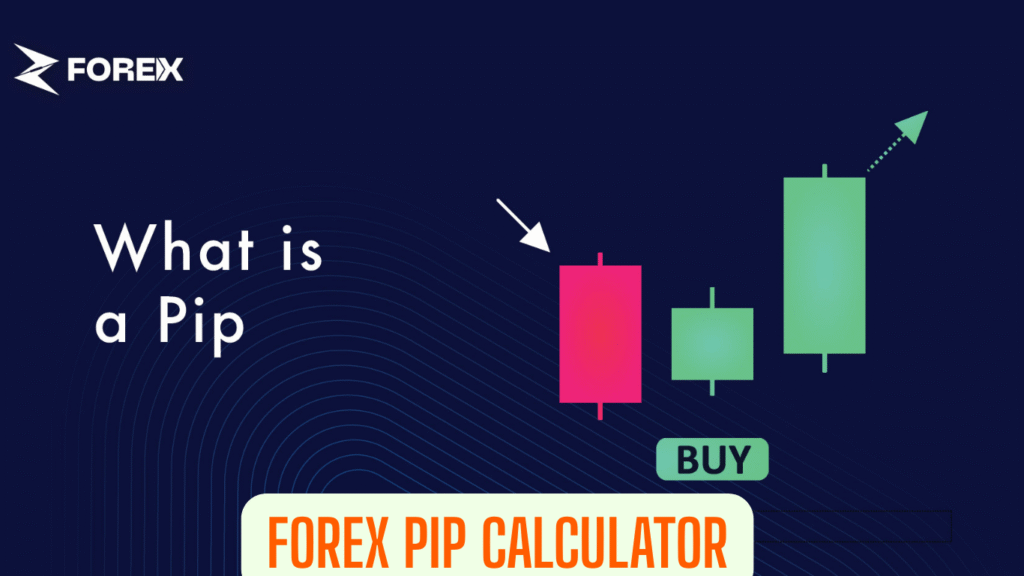
In Forex terminology, a “pip” stands for “Percentage in Point” and represents the smallest standard price movement in a currency pair’s exchange rate . For most major currency pairs like EUR/USD or GBP/USD, a pip is typically the movement at the fourth decimal place, equivalent to 0.0001 or 1/100th of 1% . This standardized measurement allows traders across the globe to quantify and communicate price changes consistently, creating a common language for discussing profits, losses, and market movements.
When trading pairs involving the Japanese Yen (such as USD/JPY), the pip convention changes slightly—a pip is represented by the second decimal place (0.01) rather than the fourth . This distinction is crucial for accurate calculations when Yen is the counter currency in a pairing.
Beyond Basic Pips: Understanding Pipettes
As trading technology has advanced, many brokers now offer fractional pip pricing, also known as “pipettes” . A pipette represents one-tenth of a standard pip, appearing as the fifth decimal place in most currency pairs (0.00001) or the third decimal place in JPY pairs (0.001) . These fractional movements allow for tighter spreads and give traders a more precise understanding of currency price movements, enabling more refined entry and exit points for their trades.
How Does a Forex Pip Calculator Work?
Inputs and Outputs
A pip calculator functions through a straightforward process that automatically computes pip values based on several key inputs :
- Currency Pair: The specific Forex pair you’re trading (e.g., EUR/USD, USD/JPY)
- Trade Size: The position size, typically measured in lots, mini lots, micro lots, or units
- Account Currency: The base currency of your trading account (USD, EUR, GBP, etc.)
- Current Exchange Rate: The market price for the currency pair you’re analyzing
Once these parameters are entered, the calculator instantly determines the monetary value of each pip movement in your account’s base currency . This immediate computation eliminates tedious manual calculations, especially valuable when trading cross-currency pairs where additional conversions would otherwise be necessary .
The Calculation Process Unveiled
While pip calculators automate the math, understanding the underlying process provides valuable insight. The fundamental formula for calculating pip value is:
Pip Value = (One Pip in Decimal Form / Exchange Rate) × Trade Size
For example, with EUR/USD at 1.1050 and a standard lot (100,000 units), the calculation would be: (0.0001 / 1.1050) × 100,000 = $9.05 per pip . When the account currency differs from the pair’s quote currency, an additional conversion factor is incorporated into this calculation . The pip calculator handles these complex conversions seamlessly, delivering accurate results regardless of currency combinations.
Key Benefits of Using a Pip Calculator
Enhanced Risk Management
The pip calculator serves as your primary risk management tool, providing immediate clarity on potential profit and loss scenarios before you even enter a trade . By knowing the exact monetary value of each pip movement, traders can set appropriate stop-loss levels based on their risk tolerance and account size . This precise approach prevents overexposure and helps maintain consistent risk-to-reward ratios across all trades, which is fundamental to long-term trading success.
Time Efficiency and Quick Decision-Making
In Forex markets where prices change rapidly, speed and accuracy are critical . Manually calculating pip values across multiple positions during volatile market conditions is not only time-consuming but also prone to human error. The instant computations provided by a pip calculator free traders to focus on market analysis and strategy execution rather than mathematics, ensuring no trading opportunities are missed due to calculation delays .
Precision in Trade Planning and Position Sizing
Perhaps the most powerful application of a pip calculator is in determining optimal position sizes . By understanding pip values, traders can precisely adjust their trade sizes to ensure that potential losses remain within predetermined risk parameters, typically 1-2% of account capital per trade . This calculated approach to position sizing acts as a safeguard against emotional decision-making and prevents catastrophic losses that could derail a trading account.
Practical Guide to Using a Pip Calculator in Your Trading
Step-by-Step Calculation Process
- Select Your Currency Pair: Choose the specific pair you intend to trade from the dropdown menu (e.g., GBP/USD)
- Enter Your Trade Size: Input your position size in lots or units (standard lot = 100,000 units, mini lot = 10,000 units, micro lot = 1,000 units)
- Specify Your Account Currency: Select the currency denomination of your trading account
- Input the Current Market Price: Enter the current exchange rate for your selected currency pair
- Review the Calculated Pip Value: The calculator will instantly display the monetary value per pip in your account currency
Real-World Trading Examples
Example 1: EUR/USD Trade
- Currency Pair: EUR/USD
- Trade Size: 0.5 lots (50,000 units)
- Account Currency: USD
- Current Price: 1.1050
- Pip Value: $5.00
Example 2: USD/JPY Trade
- Currency Pair: USD/JPY
- Trade Size: 1 standard lot (100,000 units)
- Account Currency: USD
- Current Price: 106.20
- Pip Value: $9.40
These examples illustrate how pip values vary significantly between different currency pairs and position sizes, highlighting the importance of precise calculations for each unique trade setup.
Common Mistakes to Avoid When Using Pip Calculators
Ignoring Market Volatility
One frequent error traders make is failing to account for market volatility in their calculations . During periods of high volatility, such as major economic announcements, currency pairs can experience rapid price fluctuations that may trigger stop-loss orders earlier than anticipated. While pip calculators provide precise values under normal conditions, traders should incorporate a volatility buffer during turbulent market environments to account for widened spreads and increased slippage potential.
Overlooking the Impact of Leverage
Another critical mistake is disregarding how leverage amplifies pip values . While leverage allows traders to control larger positions with less capital, it proportionally increases both potential profits and losses per pip movement. A pip calculator shows the value based on total position size, not just margin requirement, making it essential to consider leverage implications when determining position sizes and risk exposure.
Conclusion
The Forex pip calculator transcends being merely a convenient tool—it represents an essential component of professional trading discipline. By delivering instant, accurate calculations of pip values across all currency pairs and position sizes, this powerful instrument removes mathematical uncertainty from trading decisions and enforces systematic risk management practices. Incorporating a pip calculator into your daily trading routine builds confidence in your decision-making process, ensures consistent position sizing aligned with your risk tolerance, and provides clear quantification of potential outcomes before entering any trade. In the precision-driven world of Forex trading, where success often hinges on microscopic price movements, mastering the pip calculator isn’t just recommended—it’s indispensable for anyone serious about achieving long-term profitability and sustainable trading success.
Disclaimer
The information provided in this article is for educational and informational purposes only and should not be construed as financial, investment, or trading advice. Trading foreign exchange (Forex) on margin carries a high level of risk and may not be suitable for all investors. There is a possibility that you may sustain a loss equal to or greater than your entire investment; therefore, you should not invest or risk money that you are not prepared to lose. Past performance of any trading system or methodology is not necessarily indicative of future results. You should be aware of all the risks associated with Forex trading and seek advice from an independent financial advisor if you have any doubts.
FAQs
1. What is the difference between a pip and a pipette?
A pip is the standard unit of measurement for price movement, representing the fourth decimal place (0.0001) in most currency pairs. A pipette, also known as a fractional pip, is one-tenth of a pip and appears as the fifth decimal place (0.00001). For example, if EUR/USD moves from 1.10500 to 1.10501, it has moved one pipette. Many modern brokers use pipettes to offer tighter spreads and more precise pricing.
2. Do I need to use a pip calculator for every single trade?
Yes, it is considered a best practice to use a pip calculator for every trade. The Forex market requires precision, and manually calculating pip values, especially for cross-currency pairs or unusual position sizes, is prone to error. Using the calculator for each trade ensures your position sizing is always accurate, which is the cornerstone of effective risk management and helps you consistently apply your risk-per-trade rules.
3. How does leverage affect the pip value shown in a calculator?
Leverage does not directly change the pip value calculated by the tool. The pip value is based on the total trade size (lot size). However, leverage dramatically amplifies the impact of that pip value on your account equity. For example, a $10 pip value with 50:1 leverage means that each pip movement represents a much larger percentage of your actual margin deposit. The calculator shows the value per pip, but you must consider your leverage to understand the true risk relative to your capital.
4. Why is the pip value different for USD/JPY compared to EUR/USD?
The pip value differs because of how the currencies are quoted. For pairs where the USD is the quote currency (the second currency, like in EUR/USD), the calculation is straightforward. However, for pairs like USD/JPY, where the USD is the base currency, the pip value must be converted using the current exchange rate. This is why a standard lot (100,000 units) of EUR/USD might have a pip value of approximately $10, while a standard lot of USD/JPY would be calculated as (0.01 / 110.00) x 100,000 = approximately $9.09.
5. Can I rely solely on a pip calculator for my risk management?
A pip calculator is a vital component of risk management, but it should not be used in isolation. It provides the crucial data on how much you stand to gain or lose per pip. However, effective risk management also requires you to:
- Determine your stop-loss distance in pips.
- Calculate your total potential loss based on the pip value and stop-loss.
- Ensure that total potential loss is a small percentage (e.g., 1-2%) of your account balance.
The calculator gives you the number, but you must build the strategy around it.