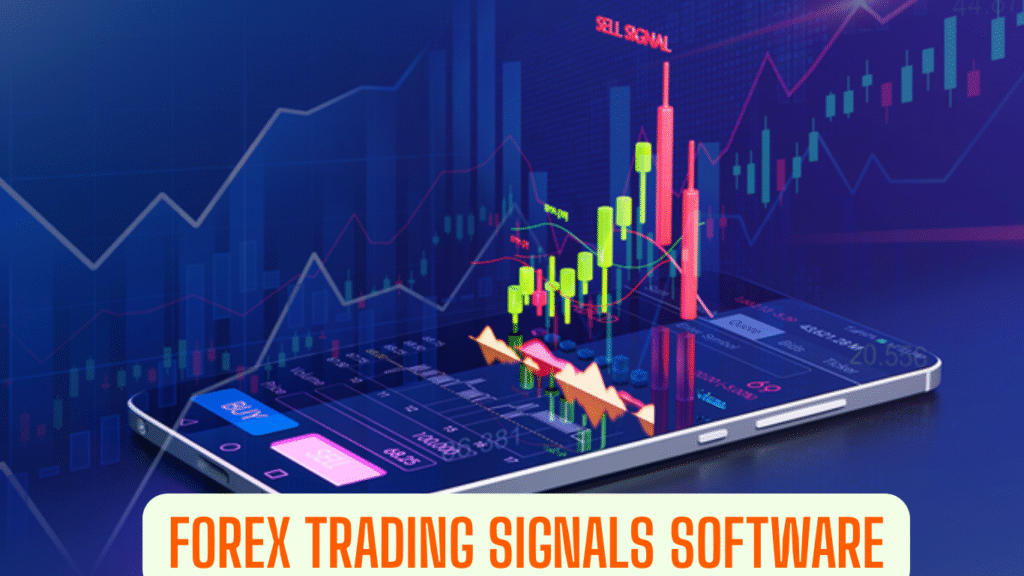

The foreign exchange market operates 24 hours a day, presenting a constant stream of opportunities that can be challenging to monitor. This is where Forex trading signals software becomes an indispensable tool for modern traders. These sophisticated systems analyze the market in real-time, delivering actionable trade recommendations directly to you. This guide delves into everything you need to know about signals software, from how it works and its benefits to how to choose the right provider for your trading journey.
What Are Forex Trading Signals?
At its core, a Forex trading signal is a suggested market entry or exit point for a currency pair. Think of it as an alert from an expert analyst or a smart algorithm, notifying you of a potential trading opportunity. A comprehensive signal typically includes :
- Currency Pair: The specific Forex instrument to trade (e.g., EUR/USD).
- Action: Whether to buy (go long) or sell (go short).
- Entry Price: The ideal price level to open the trade.
- Stop-Loss (SL): A predetermined price to close the trade and limit potential losses.
- Take-Profit (TP): A target price to close the trade and secure profits.
These signals are delivered through various methods, including dedicated software platforms, Telegram channels, email, or SMS .
How Does Forex Signals Software Work? The Technology Behind the Alerts
Forex signals software generates recommendations using a blend of advanced methodologies. Understanding the “how” is key to trusting the technology.
- Technical Analysis: This is the most common approach. The software scans price charts across multiple timeframes, using mathematical indicators like moving averages, RSI, and stochastic oscillators to identify patterns and predict future movements .
- Fundamental Analysis: Some advanced systems incorporate economic data. They analyze news events, central bank announcements, and economic reports (like GDP or employment data) to gauge the macroeconomic forces that drive currency values .
- AI and Machine Learning: The cutting edge of signals software lies in Artificial Intelligence. AI trading signals use machine learning algorithms to process vast datasets—including historical price action, trading volumes, and even news sentiment—to identify complex patterns and generate highly accurate predictions. These systems continuously learn and adapt from new market data .
- Social and Copy Trading: Platforms like MQL5 Signals and ZuluTrade function as a marketplace for signals. Instead of following an algorithm, you can subscribe to automatically copy the live trades of experienced human traders directly into your MetaTrader account .
A Comparison of Top Forex Signal Providers and Software for 2025
The market offers a diverse range of signal providers, each with unique strengths. The table below compares some of the most prominent options based on 2025 data.
| Provider / Software | Primary Method | Key Features | Best For |
|---|---|---|---|
| MQL5 Signals | Social/Copy Trading | Integrated directly into MetaTrader platforms; thousands of providers to choose from. | Traders who want to copy human experts seamlessly. |
| AI-Signals.com | AI & Algorithmic | User-friendly interface, automated signals, cross-asset support. | Beginners seeking a simple, AI-driven solution. |
| SureShotFX | Expert Analysis | High-accuracy signals (85-90%), 24/7 support, free and premium options on Telegram. | Traders looking for community-vetted, high-frequency signals. |
| PineConnector | Bridge Software | Connects TradingView alerts to MT4/MT5 for automated execution; no coding needed. | Traders who develop strategies on TradingView but execute on MetaTrader. |
| 1000Pip Builder | Manual Expert Analysis | Proven track record of steady profits, strong focus on risk management. | Traders seeking a reliable, long-established service. |
| ZuluTrade | Social/Copy Trading | Ranks “Leader” traders based on performance; includes risk management features. | Those who prefer a structured social trading platform. |
The Tangible Benefits of Using Signals Software
Integrating a signals service into your trading routine offers several compelling advantages:
- Save Time and Effort: The software does the heavy lifting of market analysis, freeing you from hours of scrutinizing charts. This allows you to focus on trade execution and strategy refinement .
- Remove Emotional Bias: Emotional trading fueled by fear and greed is a primary cause of losses. Signals software enforces discipline by providing logical, rules-based entry and exit points .
- Accelerate Your Learning: For novice traders, observing the reasoning behind signals serves as a real-time educational experience. You can learn about technical indicators, risk management, and different trading strategies by following the alerts .
- Access to Expertise and Technology: You gain the benefits of advanced algorithmic analysis or the seasoned experience of professional traders without needing to develop the expertise yourself .
- Enable 24/5 Market Coverage: The Forex market never sleeps, but you must. Automated signals software can monitor the markets and even execute trades around the clock, ensuring you never miss a potential opportunity .
Essential Guide: How to Choose the Right Forex Signals Software
With countless options available, selecting a reliable provider is critical. Here is a step-by-step guide to making an informed decision:
- Verify Performance and Transparency: This is the most crucial step. Look for providers who offer a verified track record on independent sites like MyFxBook or Trustpilot . Be highly skeptical of providers who cannot provide transparent, auditable performance data.
- Understand the Strategy and Risk: Before subscribing, ensure you understand the provider’s trading style (e.g., scalping, swing trading) and their approach to risk management. A good signal always includes a clear stop-loss and take-profit .
- Check Compatibility and Delivery: Ensure the signals are delivered in a format that works for you, whether via Telegram, email, or directly into your trading platform like MT4 or MT5 . The best signal is useless if you don’t receive it promptly.
- Start with a Demo Account: Always test a signal service using a demo trading account. This allows you to validate its performance, get comfortable with the delivery speed, and assess its compatibility with your trading style without risking real capital .
- Beware of Unrealistic Promises: Avoid any provider that guarantees profits or promises unrealistically high returns. Forex trading is inherently risky, and there is no such thing as a guaranteed win. These claims are often hallmarks of scams .
Conclusion
Forex trading signals software represents a powerful fusion of technology and trading expertise, offering a strategic edge in the fast-paced currency market. Whether you choose an AI-driven algorithm, a social copying platform, or a service based on expert analysis, the key to success lies in diligent research, starting with a demo account, and integrating signals into a broader, disciplined trading plan. By selecting a reputable provider, you can leverage these tools to save time, reduce emotional decision-making, and potentially enhance your trading performance.
Disclaimer
This article is for informational and educational purposes only and does not constitute financial advice, investment recommendation, or an offer or solicitation to buy or sell any financial instruments. Trading foreign exchange (Forex) on margin carries a high level of risk and may not be suitable for all investors. There is a possibility that you may sustain a loss equal to or greater than your entire investment. Therefore, you should not invest or risk money that you cannot afford to lose.
FAQs
1. What is the main difference between Forex signals software and a trading robot?
The core difference lies in automation. Forex signals software provides you with trade recommendations (entry, stop-loss, take-profit), but you still need to manually execute the trade in your platform. A trading robot (Expert Advisor), however, is fully automated; it not only identifies the trade but also executes it on your behalf without any manual intervention. Signals give you control, while robots offer complete automation.
2. How can I verify if a Forex signals provider is legitimate?
Legitimacy is verified through transparent, third-party performance data. Always look for providers who offer a verified track record on independent platforms like MyFxBook or FX Blue. These services automatically track and verify trading results, making it difficult to fake performance. Additionally, check reviews on sites like Trustpilot and always start with a demo account to test the service yourself before committing real money.
3. Are AI-powered trading signals better than those from human analysts?
Both have strengths and weaknesses. AI-powered signals excel at processing vast amounts of data at high speed without emotion, making them great for identifying patterns based on historical data. Signals from human analysts can incorporate qualitative factors like geopolitical context and market sentiment, offering more nuanced judgment. The “better” option depends on your preference for algorithmic precision versus human interpretation; many successful traders use a blend of both.
4. Do I need a lot of trading experience to use a signals service?
Not necessarily. Signals services are popular among beginners because they provide clear, actionable trade ideas and can serve as a valuable learning tool. However, a basic understanding of Forex concepts like pips, leverage, and how to set orders (stop-loss, take-profit) is essential to follow the signals correctly and manage your risk effectively.
5. Can I become a profitable trader by only following Forex signals?
While Forex signals can be a powerful tool, relying on them exclusively is not a guaranteed path to profitability. Success depends heavily on the quality and reliability of the signal provider, your own discipline in following the signals and managing risk, and overall market conditions. Signals should be viewed as a source of information and analysis to inform your trading decisions, not as a substitute for developing your own trading knowledge and risk management strategy.