
Swing trading represents the ideal middle ground for many forex traders, offering the excitement of active trading without requiring constant screen monitoring. This comprehensive guide explores everything you need to master this popular trading approach, from basic concepts to advanced risk management techniques.
What is Swing Trading in Forex?
Swing trading is an intermediate-term trading style where positions are held from several days to weeks to capture short-to-medium-term price movements . Unlike day traders who close all positions within a single session, swing traders maintain their trades for multiple days or weeks, aiming to profit from the natural “swings” between support and resistance levels that occur within larger market trends .
This approach sits strategically between the frantic pace of day trading and the patience-testing duration of position trading. While day traders typically hold positions for hours and position traders for months or years, swing traders operate in the sweet spot that allows for meaningful profit potential without requiring constant market monitoring . This makes it particularly appealing to those who cannot commit to watching charts throughout the day but still want to actively participate in the forex market.
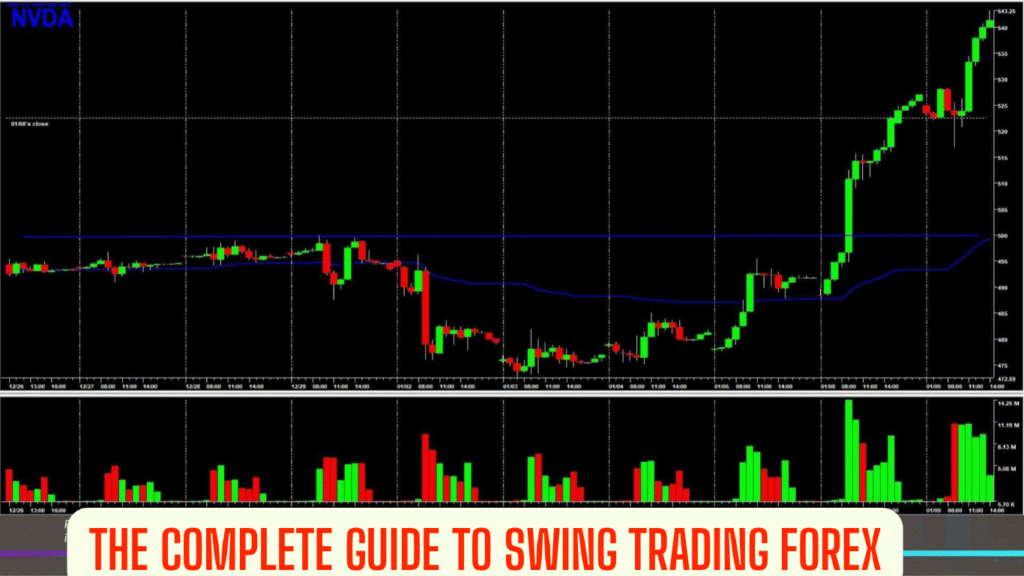
The core principle of swing trading involves identifying the overall market trend, then looking for optimal entry points to capture portions of larger price moves . Rather than attempting to catch the exact tops and bottoms—a nearly impossible feat—swing traders aim to capture the substantial middle portion of price swings between major highs (swing highs) and major lows (swing lows) .
Key Advantages of Swing Trading Forex
Swing trading offers several distinct benefits that make it particularly suitable for retail forex traders:
- Time Efficiency: Unlike day trading which requires constant screen watching, swing trading only needs periodic chart review throughout the day . This makes it ideal for those with full-time jobs or other commitments who still want to actively trade the markets.
- Reduced Transaction Costs: With fewer trades placed compared to day trading or scalping, the impact of spreads and commissions is significantly diminished . This cost efficiency helps preserve profit margins over the long term.
- Profit Potential: Swing trades typically target larger price movements than day trades, potentially resulting in greater profit per trade . While opportunities may be less frequent, the returns on each successful trade can be substantially higher.
- Reduced Stress: The slower pace of swing trading allows for more deliberate decision-making without the pressure of instant decisions required in faster trading styles . This more methodical approach can lead to better trading decisions and improved emotional control.
Table: Comparing Forex Trading Styles
| Trading Style | Holding Period | Time Requirement | Profit Potential per Trade |
|---|---|---|---|
| Day Trading | Minutes to hours | Constant monitoring | Lower |
| Swing Trading | Days to weeks | Moderate monitoring | Moderate to High |
| Position Trading | Weeks to years | Minimal monitoring | Highest |
Essential Swing Trading Strategies
Successful swing trading relies on robust strategies that can identify high-probability trading opportunities. Here are some of the most effective approaches used by professional traders:
1. Trend-Following Strategy
This straightforward approach involves identifying the prevailing market direction and trading in alignment with it. In an uptrend characterized by higher highs and higher lows, traders look to “buy the dips” near swing lows . Conversely, in a downtrend marked by lower lows and lower highs, the strategy involves “selling the rallies” near swing highs . Moving averages, particularly the 50-day and 200-day periods, are valuable tools for confirming the overall trend direction .
2. Breakout Trading Strategy
Breakout strategies focus on identifying key support and resistance levels and entering trades when the price breaches these levels with conviction . The strategy involves waiting for the price to break decisively above resistance or below support, typically accompanied by increased trading volume . Once confirmed, traders enter in the direction of the breakout, placing stop-loss orders just below the breakout level (for long positions) or above it (for short positions) to protect against false breakouts.
3. Reversal Trading Strategy
Reversal trading aims to identify potential trend exhaustion and catch new trends in their earliest stages. This approach looks for technical patterns that signal possible trend changes, such as double tops/bottoms, head and shoulders formations, and divergence on momentum indicators like the RSI or MACD . While potentially offering excellent entry prices, reversal trading carries higher risk since it involves trading against the prevailing trend until clear confirmation emerges.
4. Moving Average Crossover Strategy
This popular approach uses two or more moving averages with different periods to generate trading signals. A common configuration uses the 50-period and 200-period moving averages . When the shorter-term average crosses above the longer-term average, it generates a buy signal; when it crosses below, it generates a sell signal . While lagging somewhat behind actual trend changes, this approach provides clear, objective entry and exit points.
Must-Use Technical Indicators for Swing Trading
Effective swing trading typically combines multiple technical indicators to confirm trading signals:
- Relative Strength Index (RSI): This momentum oscillator measures the speed and change of price movements, helping identify overbought (above 70) and oversold (below 30) conditions . In swing trading, RSI can also help confirm trend strength and spot potential divergences that may foreshadow trend changes.
- Moving Average Convergence Divergence (MACD): This versatile indicator shows the relationship between two moving averages and can help identify momentum shifts . Bullish signals occur when the MACD line crosses above the signal line, while bearish signals occur when it crosses below.
- Moving Averages: Beyond crossover strategies, moving averages act as dynamic support and resistance levels . The 50-day and 200-day simple moving averages are particularly widely watched in the forex markets.
- Bollinger Bands: These volatility bands placed above and below a moving average help identify overbought and oversold conditions as well as potential breakout opportunities . When prices move close to the outer bands, it can signal extended moves that may be due for a reversal.
Critical Risk Management Techniques
Proper risk management separates successful swing traders from those who quickly blow up their accounts:
- Position Sizing: Never risk more than 1-2% of your total trading capital on any single trade . This ensures that even a string of losses won’t significantly damage your account, allowing you to continue trading effectively.
- Stop-Loss Orders: Always define your risk before entering a trade by placing stop-loss orders. For long positions, stops are typically placed below recent swing lows; for short positions, above recent swing highs . This approach ensures you exit quickly if your trade premise proves wrong.
- Risk-Reward Ratio: Aim for trades with a minimum 1:2 risk-reward ratio, meaning your potential profit is at least twice your potential loss . This creates a mathematical edge where you can be profitable even with a win rate below 50%.
- Emotional Discipline: Develop the mental fortitude to stick to your trading plan without letting fear or greed dictate your decisions . Avoid the temptation to move stop-losses further away when a trade goes against you, and don’t take premature profits out of fear.
Getting Started with Swing Trading
If you’re new to swing trading, these steps will help you build a solid foundation:
- Education: Invest time in learning technical analysis, chart patterns, and market psychology before risking real money . Quality educational resources are available through many forex brokers and independent trading websites.
- Develop a Trading Plan: Create a detailed written plan that specifies your entry and exit criteria, money management rules, and risk parameters . Your plan should be specific enough that another trader could execute it exactly as written.
- Practice with a Demo Account: Use a demo account to test your strategies without financial risk . Spend sufficient time familiarizing yourself with order placement, position management, and platform functionality before transitioning to live trading.
- Start Small: When you begin live trading, start with smaller position sizes than your risk parameters allow . This helps build confidence and real-world experience while minimizing the psychological pressure of trading larger sums.
- Keep a Trading Journal: Document every trade, including your reasoning for entering, emotional state, and lessons learned . Regularly reviewing your journal helps identify patterns in both your successful and unsuccessful trades.
Conclusion
Swing trading forex offers a balanced approach that can suit various lifestyles and personality types. By capturing intermediate-term price movements, implementing solid risk management, and maintaining emotional discipline, traders can potentially capitalize on forex market opportunities without the need for constant screen time. While success requires education, practice, and patience, the swing trading approach provides a structured framework for pursuing trading objectives in the dynamic world of foreign exchange.
Disclaimer
Trading foreign exchange on margin carries a high level of risk and may not be suitable for all investors. The possibility exists that you could sustain a loss of some or all of your initial investment, and therefore you should not invest money that you cannot afford to lose. The content provided in this article is for educational purposes only and does not constitute financial advice. You should be aware of all the risks associated with foreign exchange trading and seek advice from an independent financial advisor if you have any doubts. Past performance is not necessarily indicative of future results.
5 FAQs
1. How long should I hold a swing trade?
Swing trades typically last several days to a few weeks, depending on market conditions and the trend’s strength.
2. Is swing trading better than day trading?
Swing trading requires less screen time and is less stressful, making it suitable for traders with other commitments. Day trading can offer more frequent opportunities but demands constant attention.
3. Which currency pairs are best for swing trading?
Major pairs like EUR/USD, GBP/USD, USD/JPY, and AUD/USD are popular due to liquidity and predictable trends. Exotic pairs can offer opportunities but carry higher risk.
4. Can beginners start swing trading with a small account?
Yes, but it’s important to manage risk carefully and start with small position sizes. A demo account helps build experience first.
5. How do I choose the best indicators for swing trading?
Combine trend indicators (moving averages), momentum indicators (RSI, MACD), and volatility tools (Bollinger Bands) to confirm entries and exits. Avoid overloading charts with too many indicators.