
In the fast-paced world of currency trading, forex signals have become indispensable tools for traders seeking to navigate the volatile $7.5 trillion daily market. These actionable trade recommendations provide crucial insights into potential market movements, helping both novice and experienced traders identify profitable opportunities without conducting endless hours of market analysis. This comprehensive guide explores everything you need to know about today’s forex signals—from how they work and different signal types to practical strategies for leveraging them effectively in your trading routine.
What Are Forex Signals?
Forex signals are specialized trading recommendations that suggest specific actions for currency pairs, typically indicating when to buy or sell, at what price levels to enter trades, and where to place protective stop-loss and take-profit orders . These signals function as educational tools that help traders, especially beginners, learn to identify profitable trading opportunities while managing risk effectively .
A complete forex signal typically includes several essential components that create a comprehensive trading scenario:
- Currency Pair: The specific forex pair to trade (e.g., EUR/USD, GBP/JPY)
- Action Direction: Whether to buy (go long) or sell (go short) the pair
- Entry Price: The exact price level to enter the trade
- Stop Loss: A predetermined exit point to limit potential losses
- Take Profit: Target price levels to secure profits
Types of Forex Signals
Manual vs. Automated Signals
Forex signals are primarily categorized by their generation method, each with distinct characteristics and applications:
Technical, Fundamental, and Sentiment Analysis Signals
Signals also vary based on their analytical foundation, catering to different trading styles and timeframes:
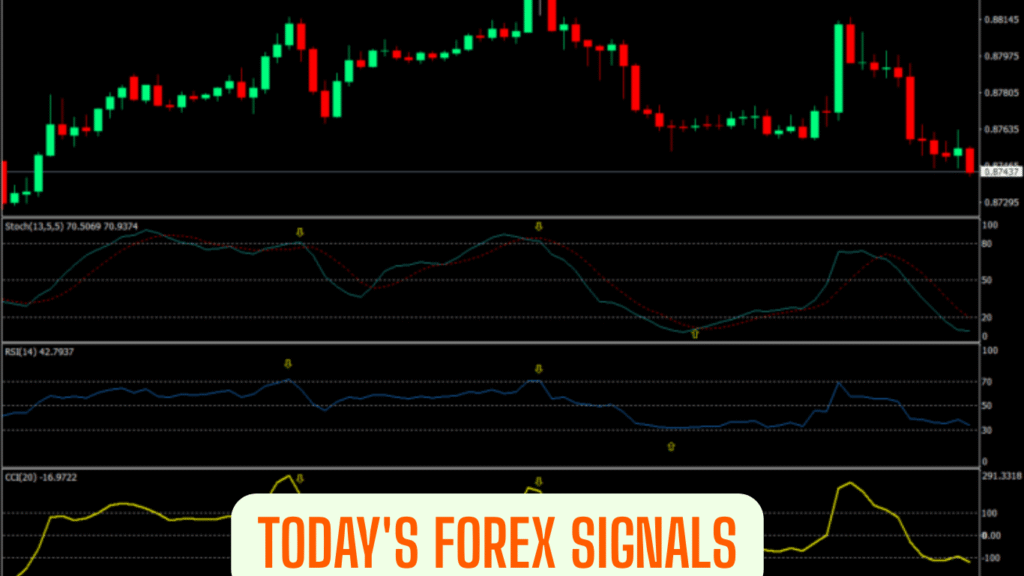
- Technical Analysis Signals: These signals rely on chart patterns, technical indicators, and historical price data. Common approaches include moving average crossovers, RSI and Stochastic oscillators for overbought/oversold conditions, MACD crossovers, and Fibonacci retracement levels . Technical signals are particularly popular among day traders and those who believe historical price patterns tend to repeat.
- Fundamental Analysis Signals: These signals focus on economic indicators, news events, and macroeconomic factors that influence currency valuations. Key fundamentals include interest rate decisions, GDP reports, employment data, inflation figures, and geopolitical developments . Fundamental signals often target longer-term market movements.
- Sentiment Analysis Signals: These signals gauge overall market sentiment using tools like the Commitment of Traders (COT) report or by analyzing social media and news sentiment to determine the collective mood of market participants .
How to Use Forex Signals in Your Trading Strategy
Developing a Systematic Approach
Effectively incorporating forex signals into your trading requires more than simply following recommendations. These steps will help you build a structured approach:
- Signal Analysis and Confirmation: Before executing any trade, analyze the rationale behind the signal. Look for confirmation through your own analysis or additional indicators to validate the opportunity .
- Risk Management Application: Determine appropriate position sizing based on your account size and risk tolerance. Never risk more than 1-2% of your capital on a single trade, regardless of how promising a signal appears .
- Trade Execution and Monitoring: Execute trades precisely according to the signal parameters, then actively monitor open positions. Be prepared to make adjustments if market conditions change significantly.
- Performance Review: Maintain a trading journal to record the outcome of every signal you follow. Analyze both winning and losing trades to identify patterns and improve your strategy over time.
Avoiding Common Pitfalls
Many traders make critical mistakes when using forex signals that can undermine their success:
- Over-reliance: Signals should complement your trading decisions, not replace your own analysis entirely. Maintain a critical perspective and understand the reasoning behind each recommendation .
- Ignoring Risk Parameters: Even the most promising signals can fail. Always use stop-loss orders and never risk more capital than you can afford to lose .
- Chasing Performance: Avoid frequently switching between signal providers based on short-term results. Give a strategy sufficient time to demonstrate its effectiveness across different market conditions.
Choosing a Reliable Forex Signal Provider
Key Selection Criteria
With countless signal services available, selecting a trustworthy provider requires careful evaluation:
- Verified Track Record: Look for providers with transparent, verified performance history on third-party platforms like MyFXBook or FXBlue . Be wary of services making unrealistic profit claims without proof.
- Analysis Methodology: Choose a provider whose analytical approach (technical, fundamental, or hybrid) aligns with your trading style and beliefs about market behavior .
- Delivery Method and Timeliness: Consider how signals are delivered (email, SMS, mobile app, trading platform) and whether the method suits your trading routine. The fastest delivery methods are essential for short-term trading .
- Risk Management Philosophy: Quality providers emphasize capital preservation and clearly communicate their risk management approach, including typical stop-loss and take-profit levels .
Free vs. Paid Signal Services
Both free and paid signal services have their place in the trading ecosystem:
- Free Forex Signals: These are widely available through social media groups, broker platforms, and community forums. While cost-effective for beginners, free signals often come with limitations including potential accuracy concerns, limited support, and less detailed analysis .
- Paid Forex Signals: Subscription-based services typically offer more comprehensive analysis, verified track records, and customer support. Paid signals generally provide better consistency and reliability but require financial commitment .
The Pros and Cons of Using Forex Signals
Advantages
- Time Efficiency: Signals save significant research time by delivering analyzed trade ideas directly to you .
- Educational Value: Following signals helps traders understand market dynamics and improves their analytical skills .
- Emotion Control: Signals provide objective entry and exit points, reducing emotionally-driven trading decisions .
- Access to Expertise: They offer access to professional-level analysis that might otherwise be unavailable to retail traders.
Disadvantages and Risks
- Accuracy Variations: No signal service is 100% accurate, and even the best providers experience losing streaks .
- Potential Scams: The industry contains dishonest providers who fabricate performance records or engage in pump-and-dump schemes .
- Over-dependence Risk: Relying too heavily on signals can hinder the development of your own trading skills and judgment .
- Cost Considerations: Quality paid signals represent an ongoing expense that must be justified by their performance.
Conclusion
Today’s forex signals represent powerful tools when understood and applied correctly. They serve as valuable decision-support systems that can enhance your trading performance when combined with proper risk management and your own market analysis. The key to success lies in selecting reputable providers whose methodology aligns with your trading goals, maintaining realistic expectations about performance, and continuously educating yourself about market dynamics. By integrating quality signals into a comprehensive trading plan while avoiding over-reliance, you can potentially capitalize on market opportunities while effectively managing your risk exposure in the dynamic world of forex trading.
Disclaimer
The information provided in this article is for educational and informational purposes only and does not constitute financial, investment, or trading advice. Trading foreign exchange (Forex) on margin carries a high level of risk and may not be suitable for all investors. There is a possibility that you may sustain a loss equal to or greater than your entire investment; therefore, you should not invest or risk money that you are not prepared to lose. Past performance of any trading system or methodology is not necessarily indicative of future results. You should be aware of all the risks associated with Forex trading and seek advice from an independent financial advisor if you have any doubts.
FAQs
1. What is the main difference between a manual and an automated forex signal?
A manual signal is generated by a human analyst who uses their experience to interpret charts, economic news, and market sentiment. An automated signal is generated by a computer algorithm or Expert Advisor (EA) that follows a strict set of rules to identify trading opportunities. Manual signals benefit from human intuition and adaptability, while automated signals offer emotion-free, 24/7 operation.
2. Can I become a profitable trader by only following forex signals?
While forex signals can be a powerful tool, relying on them exclusively is unlikely to lead to long-term, consistent profitability. Signals should be used as a component of your overall strategy, not as a complete replacement for your own education and judgment. Successful trading requires understanding the rationale behind signals, implementing strict risk management, and having the discipline to handle both winning and losing trades.
3. How can I verify if a signal provider’s performance is real?
Always look for a verified track record on independent, third-party platforms like MyFXBook or FXBlue. These platforms connect directly to trading accounts and provide transparent, uneditable performance data. Be highly skeptical of providers who only show screenshots or make vague claims about their success without this kind of verifiable proof.
4. Why is a “Stop Loss” so important in every forex signal?
The Stop Loss is a critical risk management component that defines your maximum potential loss on a trade. The forex market is volatile, and even the most promising trade idea can fail. The Stop Loss ensures that a single losing trade does not cause significant damage to your trading capital, allowing you to stay in the game and continue trading.
5. Are free forex signals as good as paid ones?
Free signals can be useful for beginners looking to learn or for validating a provider’s service before subscribing. However, paid signals generally offer greater value through more detailed analysis, verified performance history, reliable delivery, and customer support. The key is to thoroughly research any provider, free or paid, and never risk more than you can afford to lose.